Eve UHLMANN

A Voice A Passion A Soul

Eve Uhlmann

Explore the artistry, roles, and collaborations that define Eve Uhlmann’s distinctive operatic voice.
A grand opera stage viewed from the wings, with rich crimson velvet curtains partially drawn to reveal an empty, meticulously detailed set representing a 19th-century salon. Gilded architectural moldings, a gleaming black concert grand piano, and a single ornate music stand occupy the polished wooden floor. Overhead, a crystal chandelier scatters soft, warm light, while subtle blue backlighting creates depth in the distant backdrop. The atmosphere is anticipatory and sophisticated, as if a performance is moments away. Photographic realism, shot at eye level with a slight three-quarter angle, uses a shallow depth of field to keep the foreground curtains softly blurred while the stage elements are in crisp focus, emphasizing elegance and operatic grandeur.
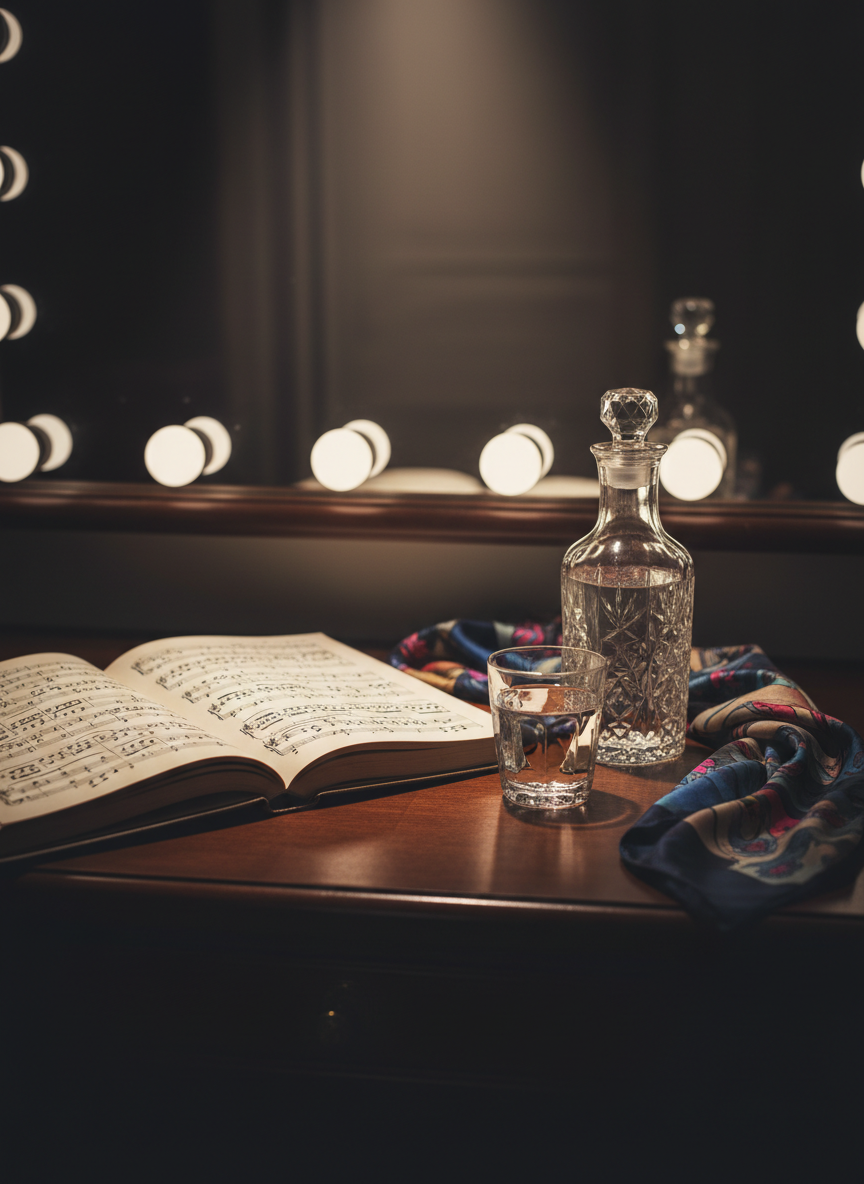
An opulent dressing room tabletop viewed in photographic realism, featuring an open leather-bound opera score annotated with neat markings, a crystal carafe of water beside a cut-glass tumbler, and a silk scarf in muted jewel tones draped casually across the surface. The tabletop is a dark polished wood that reflects a row of unlit round vanity bulbs along the mirror’s edge. Only a single warm spotlight above illuminates the scene, casting soft highlights on the crystal facets and gentle shadows from the score’s pages. The atmosphere feels contemplative and refined, suggesting pre-performance focus. Shot at eye level, framed using the rule of thirds, with the score as the primary focal point and the mirror edge receding into a subtly blurred background, emphasizing quiet elegance and artistic discipline.
A pair of exquisitely designed opera binoculars rests on the carved wooden railing of a theater box, their polished mother-of-pearl barrels and gold trim catching the glow from the stage below. Beyond them, softly out of focus, stretches the luminous proscenium arch, edged with gilded ornamentation and lush red curtains. The stage is bathed in cool, ethereal light and a discreet haze, hinting at an unfolding drama without revealing details. The lighting creates gentle highlights along the binoculars’ curves and subtle reflections on the wood grain. Photographic realism, shot from a close, low angle with the binoculars filling the foreground and the stage diffused into creamy bokeh, conveying sophisticated anticipation and the intimate privilege of opera observation.
A finely crafted, vintage gramophone with a deep brass horn and mahogany base sits atop a dark marble pedestal in a dim, elegant room lined with floor-to-ceiling bookshelves filled with leather-bound scores and librettos. A delicate black vinyl record labeled with a famous opera title spins slowly, catching glints of light along its grooves. A single shaded table lamp casts a pool of warm, focused light over the gramophone, leaving the background bookshelves in a soft, velvety shadow. The mood is nostalgic and sophisticated, suggesting a deep reverence for opera history. Photographic realism, shot from a low, three-quarter angle to make the horn feel grand and sculptural, with a shallow depth of field that keeps the gramophone in crisp detail against an atmospheric, blurred backdrop.
A close-up of an intricately engraved silver opera score cover resting on a deep midnight-blue velvet cloth. The metal surface gleams with delicate reflections, its flourished title subtly embossed, while finely textured pages fan slightly open beneath. Around it lie a pair of antique gold cufflinks shaped like miniature theater masks and a small crystal paperweight catching prismatic highlights. Soft, directional studio lighting from the left creates refined shadows and a luxurious sheen on the velvet folds. The mood is intimate and sophisticated, evoking the meticulous preparation behind opera artistry. Photographic realism, captured from a slightly elevated angle with a shallow depth of field, keeps the score cover in sharp focus while the surrounding objects blur into a tasteful, elegant bokeh.

Roles, Voice, Interpretation

From Verdi heroines to Mozart ingénues, Eve shapes each role around its vocal architecture, balancing technical clarity, long-lined phrasing, and detailed psychological insight to create vivid, believable women onstage.

Praise

Rating: 4.5 out of 5.

As Violetta, her luminous soprano soared effortlessly, marrying bel canto agility with heartbreaking vulnerability that held the audience in absolute silence.

Maestro Lefèvre

Rating: 4.5 out of 5.

Her Donna Anna revealed thrilling dramatic focus; incisive coloratura, impeccable diction and a fearless upper register made Mozart’s stakes feel startlingly immediate.

Clara Mendez

Rating: 4.5 out of 5.

As Pamina, she combined youthful warmth with crystalline line; every pianissimo floated effortlessly, revealing rare control and a deeply human, unaffected sincerity.

Lukas Steiner